
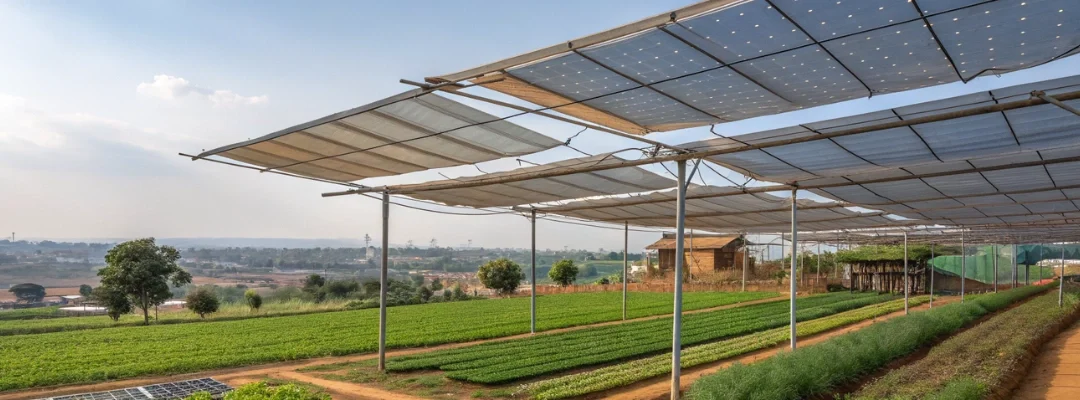
Agrivoltaics — the integration of solar power generation and crop cultivation — is revolutionizing farming in and around Bangalore’s peri urban zones. With increasing land pressure and rising electricity costs, this dual use model helps farmers grow crops and produce renewable energy from the same plot.Bangalore's climate is characterized by long dry spells, short wet seasons, and high solar irradiance. These environmental conditions make agrivoltaics an ideal solution. For example, installing solar panels reduces direct exposure to heat, preserves soil moisture, and shields delicate crops from harsh elements. In fact, farmers in peri-urban areas like Anekal, Devanahalli, and Hoskote have begun adopting these systems with promising results.Recent agrivoltaic trials in Karnataka show up to 25% improved crop survival during peak summer. For progressive farmers, this model offers not only climate resilience, but a pathway to land optimization and long-term income security.
Why Some Plants Love Life Under Solar Panels
Contrary to traditional belief, not all crops require full sunlight. Many species perform better in partially shaded environments, especially in high-temperature zones like Bangalore.When installed strategically, solar panels act like a natural canopy, moderating the microclimate below them. They provide a balanced mix of sunlight diffusion, temperature control, and evaporation reduction.
Benefits include:
- Cooler soil: Temperatures can be 10–15°F lower, reducing root stress.
- Moisture retention: Less evaporation means reduced irrigation needs.
- Physical protection: Panels shield crops from hailstorms, heavy rain, and sunburn.
A 2021 study by Oregon State University found that shaded soil retained up to 29% more moisture and maintained higher microbial activity. In Bangalore's case, this can make the difference between crop failure and a successful harvest during extended dry periods.
Creating the Perfect Microclimate
Agrivoltaic systems alter the growing environment beneath panels, producing a unique microclimate that enhances plant health and productivity.
Key Microclimate Features:
1.Temperature Regulation:
- Midday heat is moderated, reducing plant stress.
- Nighttime warmth is retained, lowering frost risk in winter.
2.Light Diffusion:
- Dappled sunlight lowers leaf damage.
- Encourages uniform growth and suppresses weeds.
3.Airflow & Humidity Control:
- Proper panel spacing promotes ventilation.
- Prevents mold, fungal infections, and pests.
In peri-urban zones, this means greater year-round crop viability. The ability to cultivate both kharif and rabi crops under a stable microclimate is a game-changer for small and marginal farmers.
Crops That Excel Under Solar Shade
The success of agrivoltaic farming depends heavily on crop selection. Below are crop categories proven to thrive in Bangalore's solar farms.
1.Leafy Greens (Spinach, Kale, Lettuce)
- Adapt well to lower light levels.
- Slower bolting and better flavor development.
- Ideal for direct sales in Bangalore’s organic markets and urban grocery chains.
2.Root Vegetables (Beets, Carrots, Potatoes)
- Require stable soil temperatures and moisture.
- Solar shade prevents soil crusting and enhances tuber formation.
- Best suited for monsoon and post-monsoon cycles.
3.Culinary Herbs (Mint, Basil, Oregano)
- Shade increases volatile oil concentration, improving aroma.
- Longer harvesting cycles (Basil yields up to 30% more under shade).
- High demand from cafes, restaurants, and farm-to-table outlets.
4.Berries (Strawberries, Blueberries)
- Sensitive to heat; shade reduces fruit rot.
- Enhanced sugar content and color vibrancy.
- Premium returns in fresh produce retail.
Each of these crops aligns with Bangalore’s urban consumer preferences, making them both agriculturally and commercially viable.
Why Agrivoltaics Is Perfect for Bangalore
Climate Synergy
Bangalore offers 300+ sunny days annually, ideal for consistent solar energy generation. Simultaneously, its peri-urban outskirts suffer from irregular rainfall and shrinking land availability, which agrivoltaics addresses directly.
Land Value Optimization
Rural zones around Bangalore face increasing land costs. Agrivoltaics enables maximum utility per acre, combining food production with energy output.
Market Demand
The city's health-conscious population drives demand for organically grown greens, herbs, and berries. Farming under solar panels allows growers to capitalize on this demand sustainably.
Energy Independence
Solar systems provide off-grid power, supporting irrigation even during outages. Farmers save on diesel costs and benefit from government feed-in tariffs.This synergy of economic, climatic, and market factors makes Bangalore one of India’s top regions for agrivoltaic investment.
Seasonal Crop Planning
To maximize yield and energy efficiency, farmers must align their crop cycles with seasonal variations.
| Season | Strategy | Suggested Crops |
| Winter (Dec–Feb) | Use residual warmth from panels to grow cold-sensitive crops | Kale, Spinach, Beetroot |
| Summer (Mar–May) | Delay sowing; avoid midday transplanting | Lettuce, Mint, Coriander |
| Monsoon (Jun–Sep) | Leverage rainwater and panel runoff | Carrots, Beets, Basil |
| Autumn (Oct–Nov) | Utilize extended daylight and residual warmth | Strawberries, Blueberries |
Proper crop rotation and planning not only sustain soil health but also extend harvest windows, creating a more predictable cash flow.