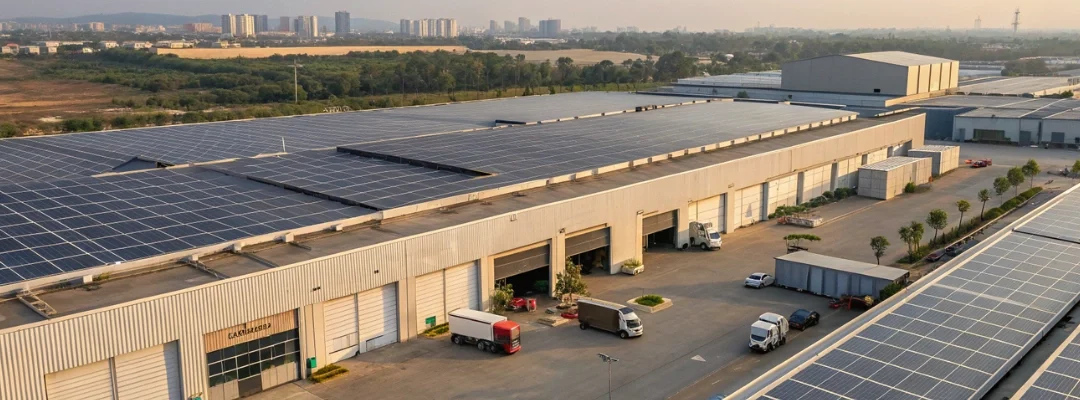
Warehouses in Bangalore are increasingly adopting solar energy solutions without upfront costs. Rising electricity tariffs, frequent power outages, and corporate sustainability goals are pushing logistics, e-commerce, and industrial storage operators toward clean energy. By switching to zero-investment solar models, warehouses can reduce operational costs, improve energy reliability, and contribute to environmental responsibility—all without tying up capital in large installations.
Zero upfront cost solar solutions, typically structured through Power Purchase Agreements (PPA), BOOT (Build-Own-Operate-Transfer), or OPEX (Operational Expenditure) models, allow warehouse owners to pay only for the electricity they use while the solar developer handles installation, maintenance, and monitoring. These third-party ownership models eliminate the need for CapEx, shifting the focus to operational savings and sustainability.
What Is Zero Upfront Cost Solar for Warehouses?
Zero upfront cost solar enables warehouse operators to generate their own electricity without investing capital in solar panels or infrastructure. Key features include:
- Installation by certified solar developers who own and operate the system.
- Monthly payments tied to electricity consumption, often lower than conventional grid rates.
- Government incentives and subsidies utilized by the developer to reduce overall costs.
- Maintenance, monitoring, and performance guarantees handled by the provider.
With models such as PPA and OPEX, developers fund, design, install, and maintain the system, while warehouses simply purchase the power generated—usually at a rate 30–40% lower than grid tariffs. These contracts typically span 10–25 years, with the option to transfer system ownership to the warehouse at a nominal cost, unlocking long-term free electricity.
Why Warehouses Benefit from Solar in Bangalore
Financial Benefits
- Reduced Electricity Bills: Solar energy can cover 30–80% of warehouse power requirements, significantly cutting monthly costs.
- Predictable Energy Costs: Pay-per-use tariffs are typically lower than grid electricity and immune to annual tariff hikes.
- Fast Return on Investment: Even without upfront investment, warehouses can realize cost savings immediately.
- Hedge Against Rising Energy Costs: Fixed PPA rates protect against grid electricity price fluctuations, offering long-term stability.
Operational Benefits
- Reliable Power Supply: Solar systems, especially with battery storage, protect against power outages common in Bangalore’s industrial areas.
- Extended Lifespan & Low Maintenance: The provider ensures regular panel cleaning, inverter maintenance, and performance monitoring, reducing downtime.
- Scalable Solutions: Systems can be expanded as warehouse operations grow, accommodating future energy needs.
- No Operational Responsibility: The solar provider manages all aspects of operations and maintenance (O&M), including monitoring and servicing.
Environmental & Brand Advantages
- Sustainability Credentials: Warehouses using solar reduce carbon footprints, meeting corporate ESG requirements.
- Improved Market Perception: Eco-friendly energy solutions enhance brand image with clients and stakeholders.
- Support for Green Logistics: Contributes to India’s renewable energy and climate goals.
- Enhanced CSR: Adoption of solar enhances corporate social responsibility, signaling a commitment to clean energy.
How Zero Upfront Cost Solar Works for Warehouses
Step 1: Site Assessment
The solar provider evaluates rooftop or available land, sunlight exposure, energy demand, and structural integrity. Warehouses with large rooftops are ideal candidates, as expansive surface area allows for higher capacity solar arrays.
Step 2: System Design & Proposal
- Custom solar system design to meet warehouse load.
- Proposal includes expected energy generation, savings, and monthly tariff. Depending on warehouse operations and load profile, developers may recommend either a BOOT model or an OPEX-based PPA.
Step 3: Installation & Commissioning
- Certified technicians handle the complete setup—solar panels, inverters, and net metering connection.
- Grid synchronization and testing ensure seamless power delivery.
Step 4: Operation & Maintenance
- Provider monitors performance, cleans panels, and handles preventive maintenance.
- Warehouses only pay for consumed energy, and any excess power can be exported under net metering policies.
- Ownership is often transferred to the warehouse at the end of the agreement, offering continued energy savings for the remaining 10–15 years of the system's lifespan.
Financial Support & Incentives in Bangalore
Even with no upfront cost, solar projects leverage government schemes and subsidies:
- Central Government: PM-KUSUM for agricultural and industrial setups; capital subsidies reduce overall project cost.
- State Government (Karnataka): Surya Raitha Scheme and other incentives encourage solar adoption, often co-financing the developer’s costs.
- Bank Financing & Loans: Developers may access low-interest loans to fund installations, passing savings to warehouse owners.
Key Considerations for Warehouses
- Roof Strength & Space: Ensure sufficient structural support for panel installation.
- Load Matching: Accurate energy consumption data ensures the system meets peak warehouse demands.
- Legal & Contractual Clarity: Carefully review PPA or lease agreements for tariff, escalation, and performance guarantees.
- Provider Selection: Partner with certified, experienced solar developers to ensure timely installation and reliable performance.
- Risk-Free Investment: Warehouses carry no financial or technical risk; the developer takes full responsibility for performance.