Industrial Solar Solutions in Bangalore

EKA Synergy offers specialized industrial solar energy solutions in Bangalore designed for high-load facilities such as factories, production units, and warehouses. An industrial solar system in Bangalore enables factories and manufacturing plants to cut operating costs, stabilize energy spending, and achieve long‑term savings.
With high daytime power usage, industrial rooftop solar delivers maximum energy utilization and faster ROI compared to traditional power sources.
At Eka Synergy Solar Solution, we provide tailored industrial solar energy solutions engineered for real factory loads — ensuring reliable performance and measurable cost reduction.
Why Industries Trust EKA Synergy for Industrial Solar in Bangalore
You’re not just buying panels—you’re investing in performance, safety, and long-term reliability.
Proven Local Expertise:
Successful industrial solar panel installations across Bangalore’s major industrial hubs — including Peenya Industrial Area, Jigani, Bommasandra, and Whitefield.
Right Sizing, Not Oversizing:
We size your solar system for factory use based on real usage, peak loads, and shadow analysis — not guesswork.
Clean & Safe Execution:
Proper mounting, safety protections, and tidy wiring ensure durable performance.
Transparent Proposals:
Clear scope, component lists, warranties, and timelines — no hidden surprises.
Post‑Commission Support:
We guide you on monitoring, performance tracking, and maintenance coordination.
How Much Solar Power Does an Industrial Facility in Bangalore Need?
| Facility Type | Typical Daily Usage | Recommended Solar System | Approx. Roof/Ground Space Required |
|---|---|---|---|
| Small Factory / Warehouse | 50–100 kWh/day | 50–100 kW | ~3000–6000 sq. ft. |
| Medium Manufacturing Unit | 100–300 kWh/day | 150–250 kW | ~6000–12000 sq. ft. |
| Large Industrial Plant | 300–1000 kWh/day | 250–500 kW | 12000+ sq. ft. |
Professional site surveys by Bangalore industrial solar providers ensure that your industrial rooftop solar installation meets energy requirements efficiently.
Types of Industrial Solar Systems
On‑Grid Industrial Solar System
- Best for: Factories with reliable EB supply and high daytime load.
- How it works: Solar powers your production loads during the day; grid supports when solar output is low.
- Why industries choose it: Lowest cost of ownership and maximum bill reduction.
Off‑Grid Industrial Solar System
- Best for: Remote facilities or sites with unreliable grid supply.
- How it works: System operates independently using solar generation and battery storage.
- Why industries choose it: Full independence from grid power — though it requires larger battery capacity and maintenance planning.
Hybrid Industrial Solar System
- Best for: Industries that want both cost savings and backup for essential systems.
- How it works: Solar powers loads during the day, and batteries support selected critical systems during outages.
- Why industries choose it: Combines savings with continuity — ideal for production lines, servers, security lighting, and control systems.
Benefits of solar system for industrial plant
Reduce Electricity Costs:
Save significantly on monthly energy bills with Industrial solar solutions Bangalore.
Stable Power for Critical Operations
With hybrid solar solutions for industrial plants, you get solar during the day and reliable backup when the grid fluctuates.
Increase Property Value
Industrial rooftop solar systems Bangalore add value to your facility.
Long-Term Performance
High-quality industrial solar panels last 25+ years with minimal maintenance.
Sustainable Operations
Reduce carbon footprint and promote eco-friendly manufacturing.
Reduced Operational Costs
An industrial solar rooftop system in Bangalore significantly cuts electricity bills, stabilizes operational expenses, and improves profit margins.
What You Get With Our Industrial Solar Energy System
Recommended System Size based on EB usage and load behavior
Practical Output Estimates (no unrealistic claims)
Clear BOM / Component List — panels, inverters, structural scope, protections
Safety Scope — isolators, earthing, surge & lightning protection
Monitoring Guidance — how to track generation & performance
Handover Checklist — ensuring your team knows what is installed and how to use it
Return on Investment (ROI) & Cost Savings from Industrial Solar Panels in Bangalore
Investing in industrial solar solutions is a strategic move for factories and warehouses. ROI depends on system size, energy consumption, and electricity tariffs:
| System Size | Suitable For | Approx. Cost (₹) | Expected ROI Timeline | Key Benefits |
|---|---|---|---|---|
| 50 kW | Small factories & warehouses | ₹35–50 lakh | 3–4 years | Covers most day-to-day electricity consumption |
| 100 kW | Medium industrial units | ₹60–80 lakh | 3–4 years | Significant reduction in operational costs |
| 250 kW+ | Large manufacturing units | ₹1.5–2.5 crore | 4–5 years | Long-term energy security and sustainability |
Maintenance of Solar power for production unit
Proper maintenance ensures that your industrial solar system in Bangalore delivers peak performance for decades. Key maintenance services include:
- Regular Cleaning: Remove dust, debris, and bird droppings from panels to maintain efficiency.
- Annual Inspections: Check inverters, wiring, and mounting structures to prevent faults.
- Performance Monitoring: Track energy production and identify underperforming components.
- AMC Services: Optional annual maintenance contracts (AMC) provide long-term monitoring, preventive maintenance, and emergency support.
Blog
From My Blog
Manual vs Robotic vs Tractor-Mounted Cleaners: Which Suits Bangalore Plants?
Maintaining the efficiency of solar panels is crucial for maximizing energy output and ensuring longevity. In regions like Bangalore, where seasonal variations can impact panel performance, selecting the appropriate cleaning method is essential. This blog delves into...
Seasonal Panel Cleaning Guide for Bangalore — Monsoon to Summer
Solar panels are a long-term investment that offer clean energy, lower electricity bills, and environmental benefits. However, Bangalore’s seasonal variations—dusty summers, heavy monsoon rains, and cooler winters—can impact panel performance. Proper seasonal...
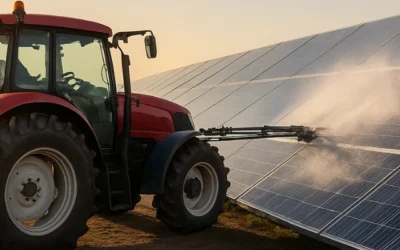
Are Solar Cleaning Tractors Worth It for Farms Near Bangalore?
In the Bangalore region, large-scale solar farms can greatly benefit from using a solar cleaning tractor or an automated robotic cleaning system. The area’s dry and dusty climate can cause significant drops in panel efficiency, while water scarcity and high labor...
FAQ– solar power for industrial use in Bangalore
1. Can industrial solar run 3‑phase machinery and heavy loads?
Yes — with correct sizing, an industrial solar system in Bangalore can power 3‑phase motors, compressors, presses, HVAC systems, and other heavy industrial equipment.
2. What types of solar systems can industrial units choose?
Industries can opt for on-grid systems, off-grid systems (with battery backup), or hybrid systems combining both.
3. How much roof space do I need for industrial solar panels?
Roof or land requirements depend on your energy consumption and system size. For example:
- Small factories (50–100 kW): ~3000–6000 sq. ft.
- Medium factories (150–250 kW): ~6000–12000 sq. ft.
- Large factories (250–500 kW): 12000+ sq. ft.
4. What is the typical lifespan of industrial solar panels?
High-quality panels last 25+ years, and performance can be maintained with regular cleaning and inspections.
5. Can solar panels fully power my industrial unit?
Yes. A properly designed system can cover most of your electricity requirements and reduce dependency on grid power.
6. How soon can an industrial solar system be installed?
After a professional site survey and system design, installation usually takes 4–6 weeks, depending on system capacity and location.
7. Do I need professional maintenance for industrial solar systems?
Yes. Regular maintenance, including panel cleaning, inverter checks, and optional AMC services, ensures your system runs efficiently and lasts longer.
8. What maintenance is required for solar panels on farms?
Regular cleaning, annual inspection of inverters and wiring, and optional AMC services ensure long-term performance. Well-maintained panels can last over 25 years.
9. Are solar panels worth it for small farms?
Definitely. Even small farms or farmhouses can benefit from 1kW–3kW rooftop solar systems, reducing electricity costs and providing reliable power for irrigation, pumps, and lighting.