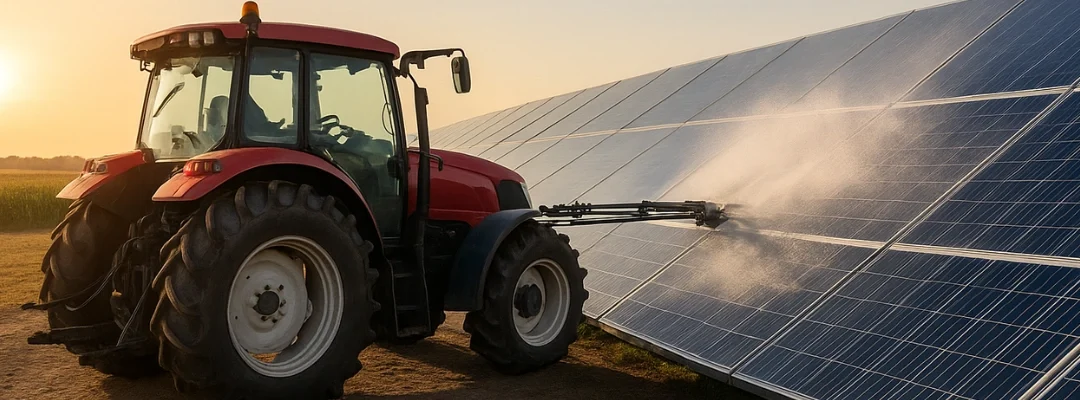
In the Bangalore region, large-scale solar farms can greatly benefit from using a solar cleaning tractor or an automated robotic cleaning system. The area’s dry and dusty climate can cause significant drops in panel efficiency, while water scarcity and high labor costs make manual cleaning less practical. For smaller installations, manual cleaning or sprinkler systems remain effective and cost-efficient alternatives.
How Solar Cleaning Tractors Work
Modern solar cleaning tractors combine automation, precision, and water efficiency:
- Brush and Spray Mechanism – Rotating brushes and controlled sprays remove dust, bird droppings, and pollen without damaging panels.
- Automated or Semi-Automated Operation – Tractors move along panel rows, covering large areas quickly and efficiently.
- Water Efficiency – Some models are waterless or use minimal water, reducing consumption by 20–40% compared to manual cleaning.
- Multi-Task Functionality – Certain tractors also perform grass trimming, debris removal, and other site maintenance tasks.
Purpose and Suitability of Solar Cleaning Tractors
Solar cleaning tractors are designed specifically for large-scale solar farms and agrivoltaic projects (≥5 MW). Key suitability factors include:
- Ideal for ground-mounted solar arrays.
- Highly effective in dusty, sandy, or bird-prone regions, like areas around Bangalore.
- Not suitable for small residential or rooftop systems, where manual or robotic cleaners are more practical.
By targeting large farms with high debris exposure, these tractors ensure optimal panel performance and energy generation.
Benefits of Solar Cleaning Tractors for Large-Scale Operations
1.Boosted Energy Output
- Accumulated dust and debris can reduce solar efficiency by up to 30%.
- Tractor-mounted cleaning restores panels to peak performance, increasing energy production by up to 20%, ensuring maximum return from the farm’s investment
2.Significant Cost Savings
- Reduces labor requirements by replacing large manual teams with one operator.
- Example: A 50 MW farm can save ₹30–₹50 lakh annually in labor costs alone.
3.Rapid Return on Investment (ROI)
- Tractor cost: ₹15–₹30 lakh
- Payback period: 1.5–2 years,thanks to increased energy yield and lower operational expenses.
4.Reduced Water Consumption
Modern tractors are water-efficient or waterless, consuming 20–40% less water than traditional manual cleaning methods, which is especially beneficial in water-scarce regions.
5.Versatility
Some tractor-mounted systems can perform additional agricultural tasks, such as grass cutting, further increasing operational efficiency.
Factors to Consider Before Investing
Scale of Installation
- Tractors are most cost-effective for farms ≥5 MW.
- Smaller installations may benefit more from manual or robotic cleaning solutions.
Dust and Dirt Levels
- High dust accumulation or bird droppings increase the frequency of cleaning, boosting tractor ROI.
- Farms near Bangalore often face dry, dusty conditions, making automated cleaning valuable.
Alternative Methods
- Autonomous cleaning robots exist but are often more expensive and less effective against heavy debris.
- Manual cleaning is suitable for smaller arrays but is labor-intensive and inconsistent.
Initial Investment
- While the upfront cost is significant, a proper cost-benefit analysis considering energy output, water savings, and labor reduction ensures profitability.
ROI Analysis: Tractor vs Manual Cleaning
| Factor | Manual Cleaning | Tractor Cleaning |
| Labor Requirement | High (10–15 workers for 50 MW) | Low (1–2 operators) |
| Energy Efficiency | 70–85% | 90–100% |
| Water Usage | High | 20–40% less |
| Payback Period | N/A | 1.5–2 years |
| Operational Risk | Human error, panel damage | Minimal |
Technology Trends in Solar Panel Cleaning
- Robotic Cleaning Systems – Autonomous robots are emerging as alternatives, suitable for specialized terrains or high-tech agrivoltaics projects.
- Waterless Cleaning Models – These tractors use brushes or air-based cleaning to reduce water usage and environmental impact.
- IoT-Enabled Cleaning – Advanced tractors can be connected to solar monitoring systems, automatically scheduling cleaning based on dust accumulation data.
Farms adopting these technologies can maximize ROI while minimizing operational risks.