
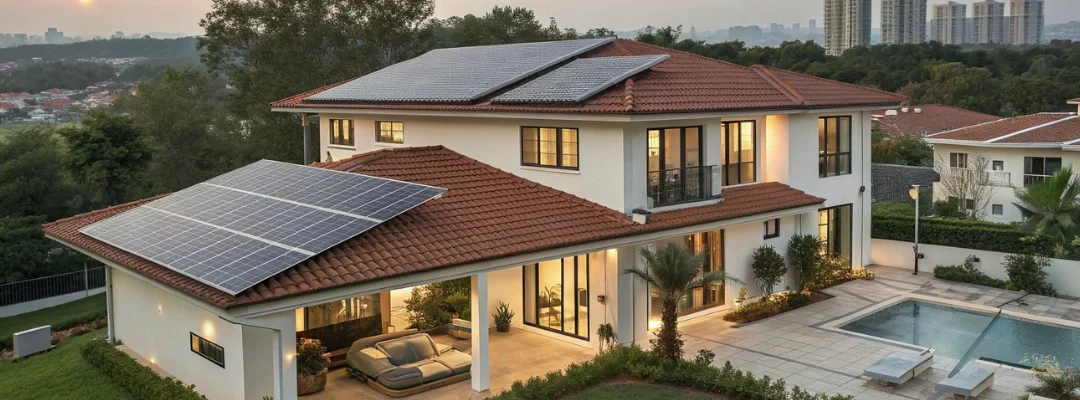
As Bangalore grows into a major IT and industrial hub, electricity consumption is rising rapidly. Homeowners, businesses, and institutions are increasingly turning to solar energy to reduce electricity costs and embrace sustainable living. But with multiple solar solutions available, the question arises: Which is better for Bangalore — a Micro Solar System or a Mini Solar System?This blog will help you understand the differences, applications, and benefits of both systems so you can make an informed decision.
Understanding Micro and Mini Solar Systems
Both micro and mini solar systems are small-scale solutions designed to cater to specific energy needs. The main difference lies in scale, purpose, and applications.
Micro Solar System
- Scale: Smaller systems, typically for a single building or facility.
- Purpose: Ensures energy reliability for individual households or critical infrastructure.
- Equipment: Often uses microinverters, allowing each panel to function independently.
- Applications in Bangalore:
- Individual homes and apartments
- Offices and commercial buildings
- Schools and hospitals
Mini Solar System
- Scale: Larger systems designed to serve multiple households or a community.
- Purpose: Provides communal energy solutions, often acting as a small microgrid.
- Applications in Bangalore:
- Residential societies and apartment complexes
- University and college campuses
- Community or neighborhood energy projects
Key Factors to Consider in Bangalore
When deciding between a micro or mini solar system, consider these factors:
Energy Requirement
- Micro Solar: Best for individual homes, offices, or single buildings.
- Mini Solar: Suitable for communities or facilities with shared energy consumption.
Rooftop Space
- Micro Solar: Ideal for limited rooftop areas, such as apartments or offices.
- Mini Solar: Requires larger rooftops or community spaces to generate enough energy.
Budget
- Micro Solar: Lower upfront cost, easy installation, and maintenance.
- Mini Solar: Higher investment but shared among multiple users, making it cost-effective in the long run.
Sustainability Goals
- Both systems reduce carbon footprint.
- Micro Solar: Focused on individual energy efficiency.
- Mini Solar: Provides wider community impact and collective energy savings.
Benefits of Micro and Mini Solar Systems
| Feature | Micro Solar System | Mini Solar System |
| Scale | Single building or facility | Multiple households or community |
| Installation | Quick and simple | Larger setup, more complex |
| Energy Output | Optimized for specific needs | Optimized for community consumption |
| Cost | Lower upfront | Higher upfront but shared cost |
| Maintenance | Easy | Requires coordinated plan |
| Best For | Homes, offices, hospitals | Residential societies, campuses |
Which System Should You Choose for Bangalore?
Choose Micro Solar System if:
- You own a standalone home, office, or critical facility.
- Rooftop space is limited.
- You want individual energy independence.
Choose Mini Solar System if:
- You manage a residential society, community, or campus.
- Shared energy usage across multiple buildings is needed.
- Long-term cost savings and high energy output are priorities.
Tips for Maximizing Solar Efficiency in Bangalore
- Regular Cleaning: Dust and pollution in urban Bangalore can reduce efficiency; professional solar panel cleaning services help maintain output.
- Optimal Placement: Panels should receive maximum sunlight exposure throughout the day.
- Monitoring: Track energy generation using monitoring systems to detect issues early.
- Government Subsidies: Take advantage of central and state solar subsidies to reduce installation costs.
Final Verdict
Both micro and mini solar systems are excellent solutions, but the right choice depends on your specific energy needs, space, and budget.
- Micro Solar Systems: Ideal for single buildings, homes, or offices seeking reliable, independent energy.
- Mini Solar Systems: Perfect for residential societies, campuses, or communities, offering larger energy output and collective savings.
With rising electricity tariffs in Bangalore, adopting solar energy is not just environmentally responsible — it’s also financially smart.